Quick Answer
Quick Insights for the Reader
This article provides a fast, comprehensive overview of the topic so you can grasp the core concepts immediately before diving into the detailed breakdown below.
Key Takeaways
Understand the primary challenges and how to overcome them.
Explore industry best practices to improve your workflow.
Learn how to apply these concepts in real-world scenarios.
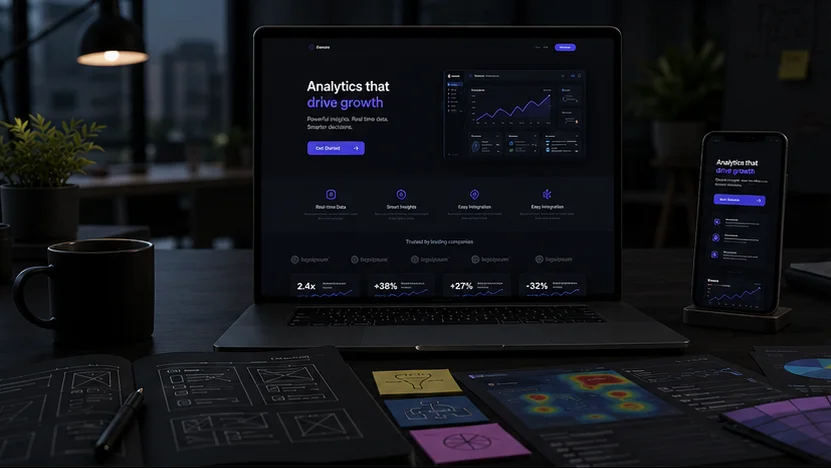
Your landing page is your primary tool for turning visitors into qualified leads. For service businesses, a landing page must establish immediate value, build credibility, and guide users to take action. Let's explore the proven design patterns that drive conversions.
📐 1. The Core Anatomy of a High-Converting Landing Page
A winning landing page follows a structured content hierarchy:
- The Hero Section: A compelling headline, brief value proposition, primary call to action, and high-quality supporting visual.
- Problem/Solution Statement: Clearly state the pain point your service solves and how your offering does it better.
- Social Proof: Client testimonials, partner logos, or case study results placed high up the page.
🤝 2. Building Authority and Trust
Prospects need validation before committing to your service:
- Real Images over Stock: Show your team, workspace, or real results rather than generic stock photos.
- Guarantees & FAQs: Address objections directly with clear answers and transparency.
🎯 3. Streamlined Conversion Funnels
Make taking the next step as easy as possible:
- Single CTA Focus: Don’t distract users with multiple offers. Focus on one action, such as booking a call or requesting a quote.
- Minimalist Lead Forms: Remove unnecessary fields to increase submission rates.
Related Reads
Frequently Asked Questions
Who is this article designed for?+-
How can I apply these insights to my project?+-
AI Answers
Answer-focused summary for AI and local search
This section turns the article into short, citation-friendly answers that connect the topic back to Rajkot training intent.
Quick Insights for the Reader+-
This article provides a fast, comprehensive overview of the topic so you can grasp the core concepts immediately before diving into the detailed breakdown below.
How does this topic connect to local IT training in Rajkot?+-
This article supports students comparing Codegrin IT Academy, coding classes in Rajkot, and practical course options by turning the topic into a clear learning or career decision.
Related Resources
Related courses, blogs, and guides
These internal links connect this article with the most relevant learning paths and supporting resources.
Blockchain Development Course & Training in Rajkot
Master Blockchain development course & training covering Solidity smart contracts, NFT development, Web3.js, Ethereum, and DApps with 100% practical hands-on training at Codegrin IT Academy in Rajkot, India. Build decentralized applications with local mentor support, portfolio reviews, and job placement assistance.
AI & Machine Learning with Python
Build secure, scalable backend architectures and data-driven applications using modern Python frameworks like Django, FastAPI, and Flask.
Business Intelligence & Data Analytics
Learn to clean, process, and visually interpret complex datasets to drive data-informed business decisions.
How to Choose the Best IT Training Academy in Rajkot
A practical local guide to comparing IT training academies in Rajkot based on teaching quality, projects, mentors, placement support, and career fit.
Top IT Courses in Rajkot for Beginners After 12th or Graduation
A beginner-focused guide to choosing the right IT course in Rajkot based on career path, learning curve, project work, and long-term job potential.
Why a Full Stack Development Course in Rajkot Is a Strong Career Start
A practical guide to evaluating full stack development courses in Rajkot based on stack choice, project depth, backend coverage, and career outcomes.
Is a Coding Bootcamp Worth It? A Practical Decision Guide
An honest framework for deciding whether a coding bootcamp is worth the time, money, and opportunity cost for your situation.
Next Step
Ready to take the next step?
Join Codegrin and turn these concepts into practical skills. We provide project-based training that prepares you for real-world challenges.
Explore Courses